Resources
Go as technical as you need.
Understand the architecture, watch Kelvin operate, read the technical reference, then learn how to build and run Applications yourself.
See how Kelvin actually works.
The public documentation covers the core platform: Connectors, Engines, Agents, Applications, Tasks, Data Quality, Guardrails, APIs, the Kelvin SDK, deployment, and administration.
For a technical evaluation, start with the questions that determine whether an industrial system can move safely from recommendation to action:
How is data determined to be fit for a decision?
How are write permissions and guardrails configured?
What happens when an action fails?
How is reported state verified?
What continues running during a network outage?
How are identity, permissions, and audit handled?
The documentation covers the implementation details behind those answers.
Watches for scenarios, interprets situations, and acts within limits the operator defines.
Docs: AI Engineer AgentPython apps that process asset data to generate control changes and recommendations.
Docs: ApplicationsFive built-in checks, from data availability to timestamp anomalies.
Docs: Data QualityThe final layer of validation: a write outside the rules is rejected and logged.
Docs: GuardrailsWatch the process, event to impact.
See Kelvin connect to operating assets, identify an event, evaluate the evidence, recommend an action, pass it through guardrails and approvals, execute it, and measure the result.
Walkthroughs also cover building Applications, configuring connections, changing autonomy, inspecting the audit trail, and measuring impact against a defined baseline.

Name a flagged event as an insight, let Kelvin search additional assets for the same pattern, accept the matches, and create a Task from it.
Docs: Insights Open the walkthrough
Name a connection, map what Kelvin reads, and switch on write-back stream by stream before it deploys.
Docs: Connect to data Open the walkthrough
Before and after on throughput, downtime, and energy.
Docs: Applications Open the walkthroughEvent → Insight → Action → Impact, on real operating workflows.
Learn to run Kelvin yourself.
Kelvin Academy is built for the engineers, operators, developers, and administrators who will deploy and operate the platform.
Training covers three paths:
operating Kelvin, building on Kelvin, and administering Kelvin.
The objective is self-sufficiency.
Your team should understand the Applications, maintain connectivity, configure governance and permissions, deploy new capabilities, and diagnose problems. It should also know when an Application is ready for greater autonomy and when it is not.
Kelvin can support initial deployment and production rollout.
How much we remain involved after that is your choice.
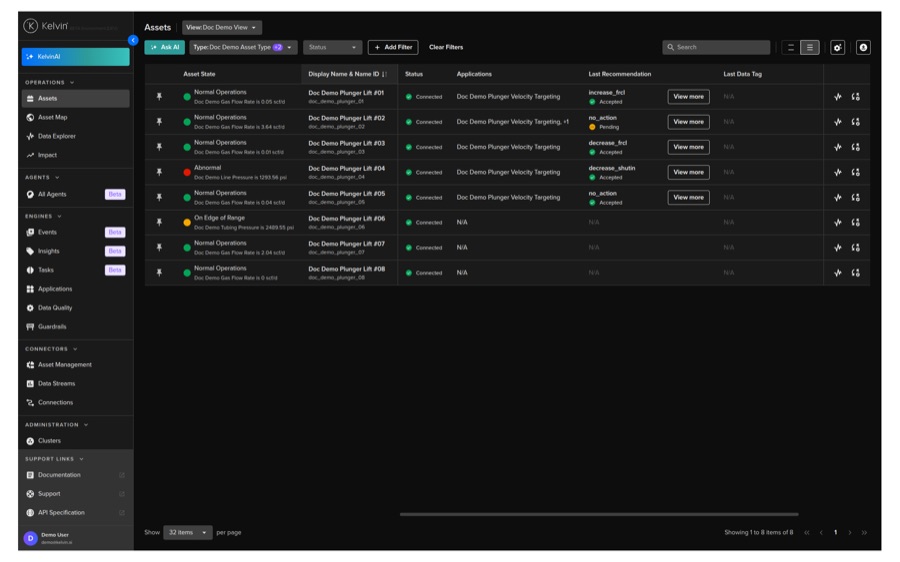
One table runs the fleet: states, recommendations and manual controls in place.
Read the guide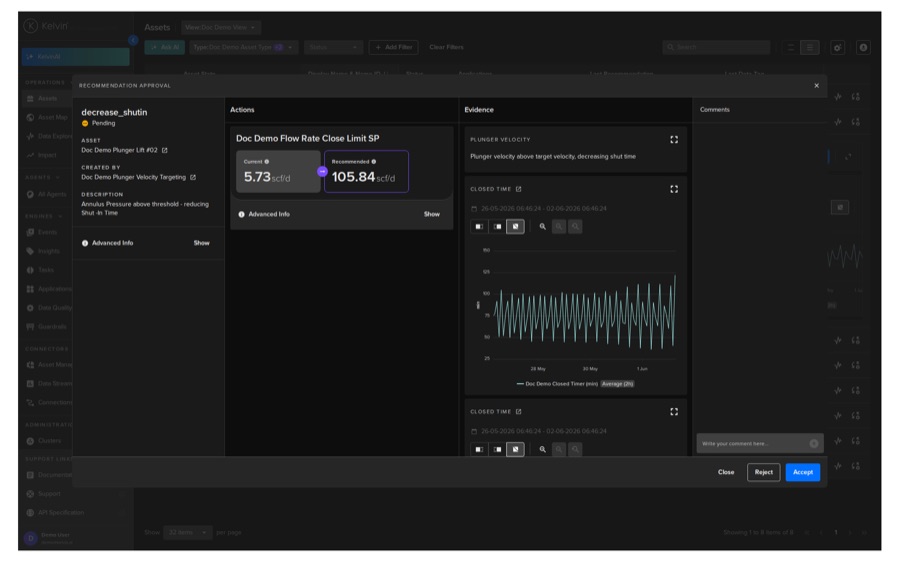
A recommendation arrives with its evidence, and you accept or reject it.
Read the guide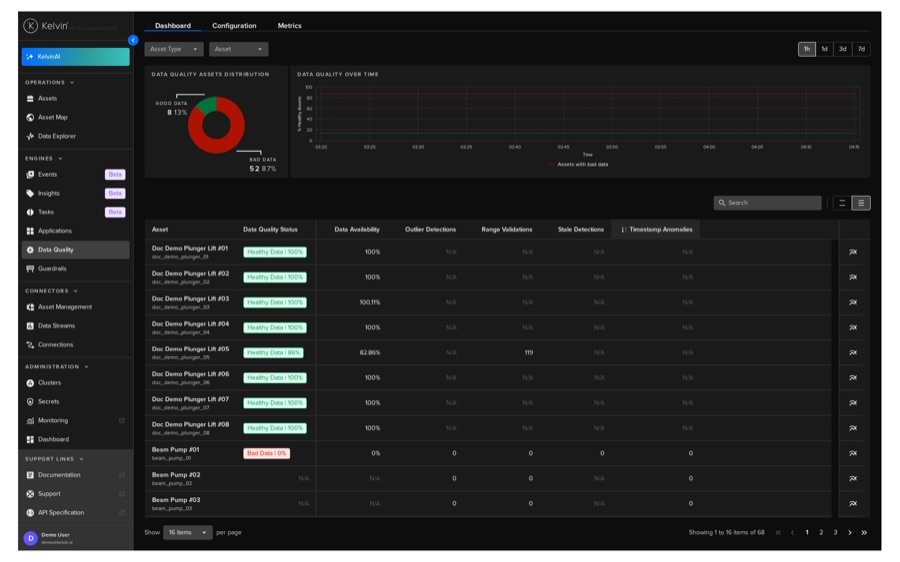
Every reading is scored before it moves a setpoint: the five checks and the guardrails behind them.
Read the guideThe longer version of the argument.
Industrial Systems of Action
Why industrial companies have accumulated enormous amounts of data and intelligence while the last mile from decision to governed action remains largely manual.
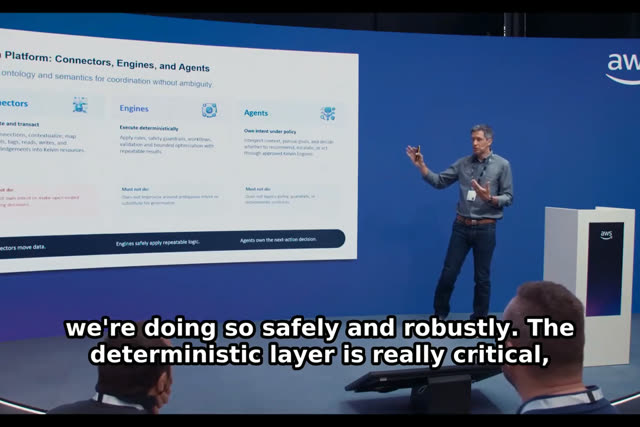
The founding story.
How an Android phone attached to a pump jack helped establish a simple idea: understanding what is happening matters only if you can safely change what happens next.

Kelvin.AI Oil & Gas
An intelligent assistant for oil and gas operations. Produced under COMPETE 2030, co-financed by the European Union. In Portuguese, 1 minute 23 seconds.
Autonomous operations.
How Event → Insight → Action → Impact changes the operating hierarchy, from people coordinating every machine decision to people governing the software that coordinates the operation.
Talk to usBring your controls engineer, your data architect, and your security lead.
We will review the questions that determine whether a proof of concept can become production infrastructure. Those are OT connectivity, network architecture, edge and disconnected operation, data quality, action verification, guardrail enforcement, identity and access, model-provider choices, data portability, asset modeling, and ownership.
We would rather resolve those questions before deployment than discover them in week eleven.
Technical diligence is how autonomous operations qualify for production.