The System of Action for the physical world
Turn intelligence into action.
Kelvin connects live operational data, engineering knowledge, models, and AI to the machines and processes you already run. It is the System of Action for the physical world.
Kelvin can identify what is happening, define what should happen next, execute the action within defined guardrails, and measure the result.
An action can be a recommendation, an approval, a workflow, a work order, a parameter update, or a control change.
Event → Insight → Action → Impact
Between intelligence and physical operations.
Above Kelvin are the people and intelligence that understand what should happen: engineers, operators, applications, optimization models, AI models, and third-party systems.
Above Kelvin
the people and intelligence that understand what should happen
Kelvin
ConnectorsEnginesAgentsApplications
Below Kelvin
the operational infrastructure that makes it happen
Below Kelvin is the operational infrastructure that makes it happen: PLCs, RTUs, DCS, SCADA, historians, BMS, edge gateways, databases, and enterprise systems.
Kelvin connects the two.
The platform augments the infrastructure you already run instead of requiring you to replace it.
It provides four layers with distinct responsibilities:
Connectors, Engines, Agents, and Applications.
Together, they turn operational events into governed, measurable action.
Kelvin Connectors
Connectors connect Kelvin to the operation.
Connectors provide a live, two-way connection between Kelvin and your existing infrastructure.
A Connector maps protocol addresses and data sources to assets and data streams with context, the appropriate units, timestamps, meaning, and read/write permissions.
Operational data comes in, governed actions go out, and reported state comes back.
Kelvin supports existing industrial and enterprise interfaces including OPC UA, Modbus TCP, MQTT, PI System, databases, APIs, and custom connectors.
It can also consume existing data infrastructure such as Sparkplug B or Kafka instead of duplicating connectivity already in place.
Assets and data streams can be provisioned and managed through the UI or API, including bulk configuration for large deployments.
| Display Name & Name ID ⇅ | Type | Data Type | Unit | Semantic Type |
|---|---|---|---|---|
| Exit Temperatureexit_temperature | Measurement | Number | Degree Celsius | Temperature |
| Moisturemoisture_pct | Measurement | Number | Percent | Level |
| Feed Ratefeed_rate | Measurement | Number | Tonne per Hour | N/A |
| Speed Setpointspeed_sp | Measurement | Number | Revolutions per Minute | N/A |
| Discharge Pressuredischarge_pressure | Measurement | Number | Pound per Square Inch | Pressure |
| Line Throughputline_throughput_tph | Computed | Number | Tonne per Hour | N/A |
Connectors move information and actions.
They do not decide what the operation should do.
Learn how Kelvin deploysKelvin Engines
Engines make execution deterministic.
Engines provide the deterministic operating layer between a decision and its execution.
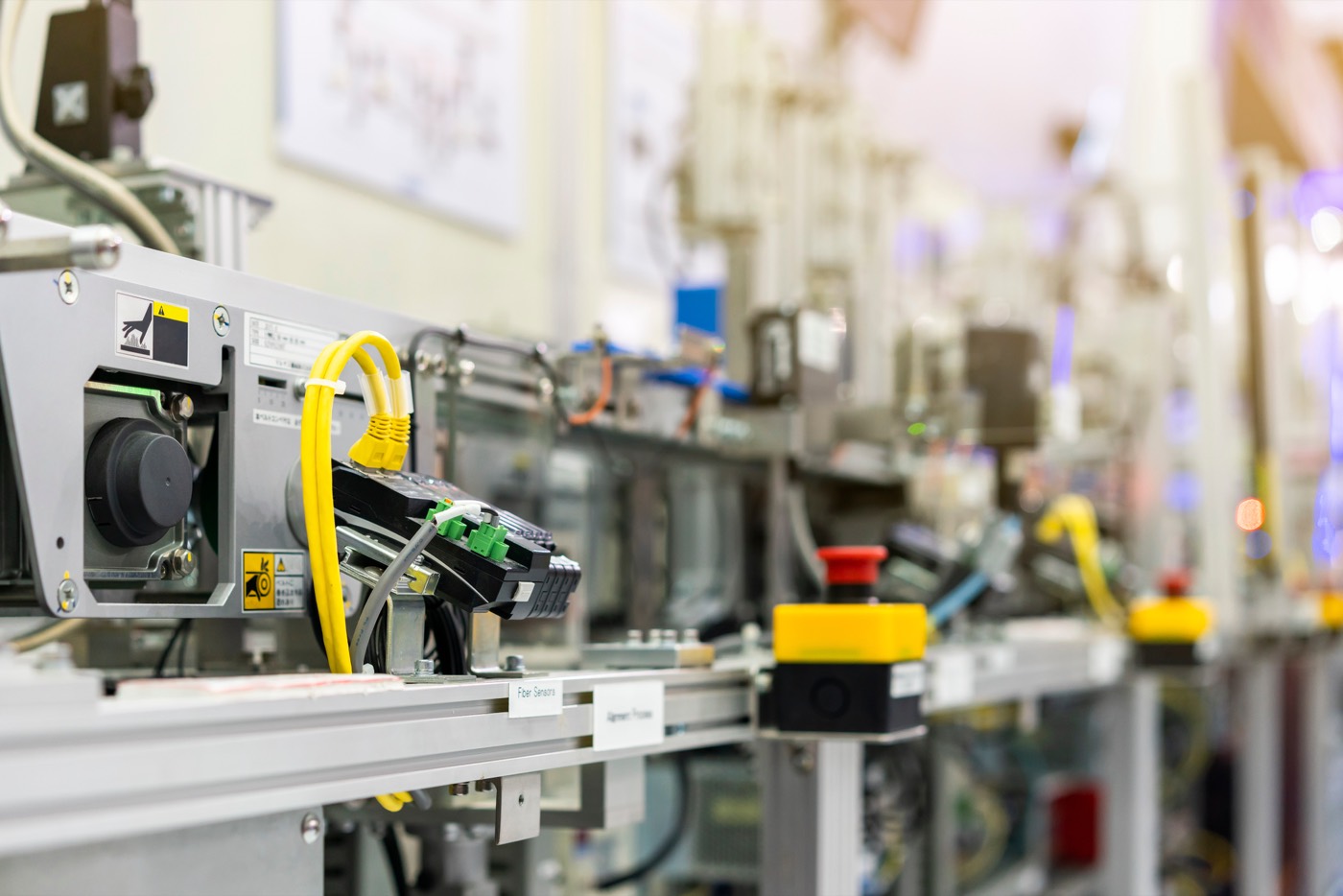
They handle data quality, rules, calculations, workflows, validation, bounded optimization, orchestration, and control.
Unlike agents, Engines do not interpret ambiguous intent. Given the same inputs, configuration, and state, they apply the same defined logic.
Kelvin evaluates whether incoming data is fit to drive a decision, checking conditions such as availability, freshness, range, outliers, and timestamp integrity. If required data fails the defined quality criteria, the application can hold instead of acting.
Proposed actions are evaluated against the operating bounds and constraints defined for the application, asset, and writable data stream before execution. Additional application-specific constraints can be implemented in application logic and managed through the customer’s development and change-control process.
Kelvin’s guardrails supplement the hard limits, alarms, interlocks, and safety logic already implemented in PLCs, RTUs, DCS, and safety systems.
Kelvin governs the action. Existing safety systems remain authoritative for equipment protection.
Kelvin Agents
Agents evaluate what should happen next.
Agents combine operational context with live and historical data, engineering knowledge, models, tools, and application logic. They use it to investigate what is happening and evaluate the appropriate next action.
An Agent can diagnose an event, answer an operational question, evaluate alternatives, invoke a model or tool, and recommend an action or, where authorized, initiate it.
Agents can be specialized around a machine, process, workflow, or operating objective.
Agents do not bypass the deterministic operating layer.
Any action they initiate remains subject to the policies, permissions, guardrails, approval requirements, and control paths defined for the application.
Kelvin works with any model.
Applications can use commercial, open-weight, customer-developed, or future models without tying operational authority to a particular model provider. Model selection, routing, permissions, validation, and audit remain governed by the Kelvin platform.
| Asset ⇅ | Type | Status |
|---|---|---|
| Dryer 01 | Dryer | Connected |
| Dryer 02 | Dryer | Connected |
| Dryer 03 | Dryer | Connected |
The intelligence can change without changing the authority you granted it.
Kelvin Applications
Applications turn capability into operational work.
Applications bring Connectors, Engines, Agents, models, and user workflows together around a specific operating objective.

An Application might optimize a production process, monitor a compressor, coordinate a field workflow, detect and respond to abnormal conditions, manage maintenance activity, or control a machine.
Kelvin Tasks give engineers and operators a guided or conversational way to create and manage operational workflows from the interface. Developers can build more specialized Applications using Kelvin APIs and the SDK. They can integrate existing models and optimization logic, or deploy containerized applications on the platform.
Applications can be packaged once and deployed across similar assets.
That lets the operating knowledge of the best engineers scale across a fleet.
Choose how much authority each application is granted.
Autonomy is not binary. Kelvin lets you determine how much decision-making and execution authority an Application has by use case, asset, and operating condition.

Changes in autonomy are permissioned and auditable, and authorized users can reduce or revoke authority.
Existing PLC and RTU logic, alarms, safety systems, interlocks, and manual controls remain in place. Kelvin operates above these direct field-control loops and does not replace them.
An action is not complete when the command is sent.
Kelvin maintains the chain from decision to execution to outcome.
For a control action, Kelvin records what was proposed, the evidence supporting it, and which user or Application initiated it.
It also records the approval when required, what command was issued, and what the target system reported afterward.
That distinction matters.
A command being transmitted does not mean the physical operation achieved the intended result.
Kelvin can evaluate the reported state and subsequent operating telemetry.
That shows whether the requested change took effect and whether the expected operational outcome followed.
If the action is rejected, fails to achieve the required state, or creates conditions that require another response, the Application can escalate, hold, reverse, or initiate another governed action.
The record connects what was decided, what Kelvin did, what the operation reported, and what changed as a result.


You own the operation, the intelligence, and the control.
Kelvin is built to augment your technology stack, not replace it with a closed system.
You own your data, asset models, Applications, models, and operational knowledge.
You determine which intelligence to use, what authority it receives, and how its actions are governed.
The platform is API-first and vendor-neutral.
You can bring your own models and agents, connect your existing data and control infrastructure, and build your own interfaces and HMIs. You can develop with Kelvin APIs and the SDK, or deploy containerized Applications on the platform.
Python SDK in the docsApplications can run at the edge or in the cloud, in Kelvin-managed infrastructure or your own environment.
As AI technology changes, the operational knowledge and learning you create remain yours.
There is no lock-in to a model, cloud, or control vendor.
Edge, on premises, cloud, or all three.

Kelvin can run at the edge, on premises, in your cloud environment, or as a Kelvin-hosted service.
Hybrid architectures can distribute the work across all three.
At the edge, Kelvin can continue to acquire and process data, run Applications, models, and Agents, execute governed actions, and record results.
None of that needs a cloud connection.
See the platform controlsData is buffered locally and synchronized when connectivity returns.
Containerized applications can run on industrial edge hardware using Docker, K3s, or Kubernetes.
Deployment is sized according to the Applications, models, data rates, asset count, availability requirements, and hardware environment.
If Kelvin becomes unavailable, the existing PLC, RTU, DCS, alarms, interlocks, and local control logic continue to operate independently.
Read the Data Quality docsKelvin governs who and what can observe, decide, approve, and act.
Enterprise identity and access controls manage access across users, Applications, assets, and data. Permissions determine which actions can be taken, against which assets, and under what conditions.

Every governed action creates an audit trail that includes the initiating user, Agent, or Application, the approvals, autonomy changes, commands, reported state, and relevant operating context.
Kelvin is SOC 2 Type II audited annually and participates in the Cloud Security Alliance STAR registry. Its information security program uses ISO 27001 as a reference framework.
Customer data and operational knowledge remain governed by the customer’s agreement with Kelvin.
Every autonomous action has boundaries, and every consequential action has a record.
Measure what the action changed.
Kelvin connects every action to its operational result.

Your engineers define the appropriate baseline and measurement methodology for the Application.
Depending on the process, that can include historical performance, operating trends, decline curves, control periods, or another agreed method.
Kelvin compares performance after an action against that baseline and can quantify the resulting impact across individual assets or an entire fleet.
The underlying telemetry, actions, parameters, and impact logic remain available for review and verification.
Impact can be expressed in the operating measures that matter to the business: production, throughput, downtime, energy, waste, emissions, field activity, cost, or financial value.
Proven in real operations.
Kelvin has been operating in the physical world since 2015, across distributed assets, industrial processes, and demanding operating environments.
Fortune 500 energy services company
At a Fortune 500 energy services company, Kelvin has been running continuously in production for more than six years.
It has expanded across three operating divisions, including autonomous control of critical workflows.
Leading materials manufacturer
At a leading materials manufacturer, Kelvin processes more than 1.2 billion sensor readings each month and connects directly to operating equipment.
It continuously adjusts the process to increase throughput and prevent costly crashes.
Global energy major
For a global energy major, Kelvin moved from concept to proven results in six months.
It scaled to hundreds of wells in under a year.
Across these deployments, the pattern is the same: Event → Insight → Action → Impact.
Bring us a real operating decision.
Show us a recurring decision your operation makes today: the event that triggers it, the data and knowledge that inform it, the action that follows, and the result that matters.
We’ll show you how Kelvin can turn that decision into a governed, measurable Application, from human-supervised execution to autonomous operations.